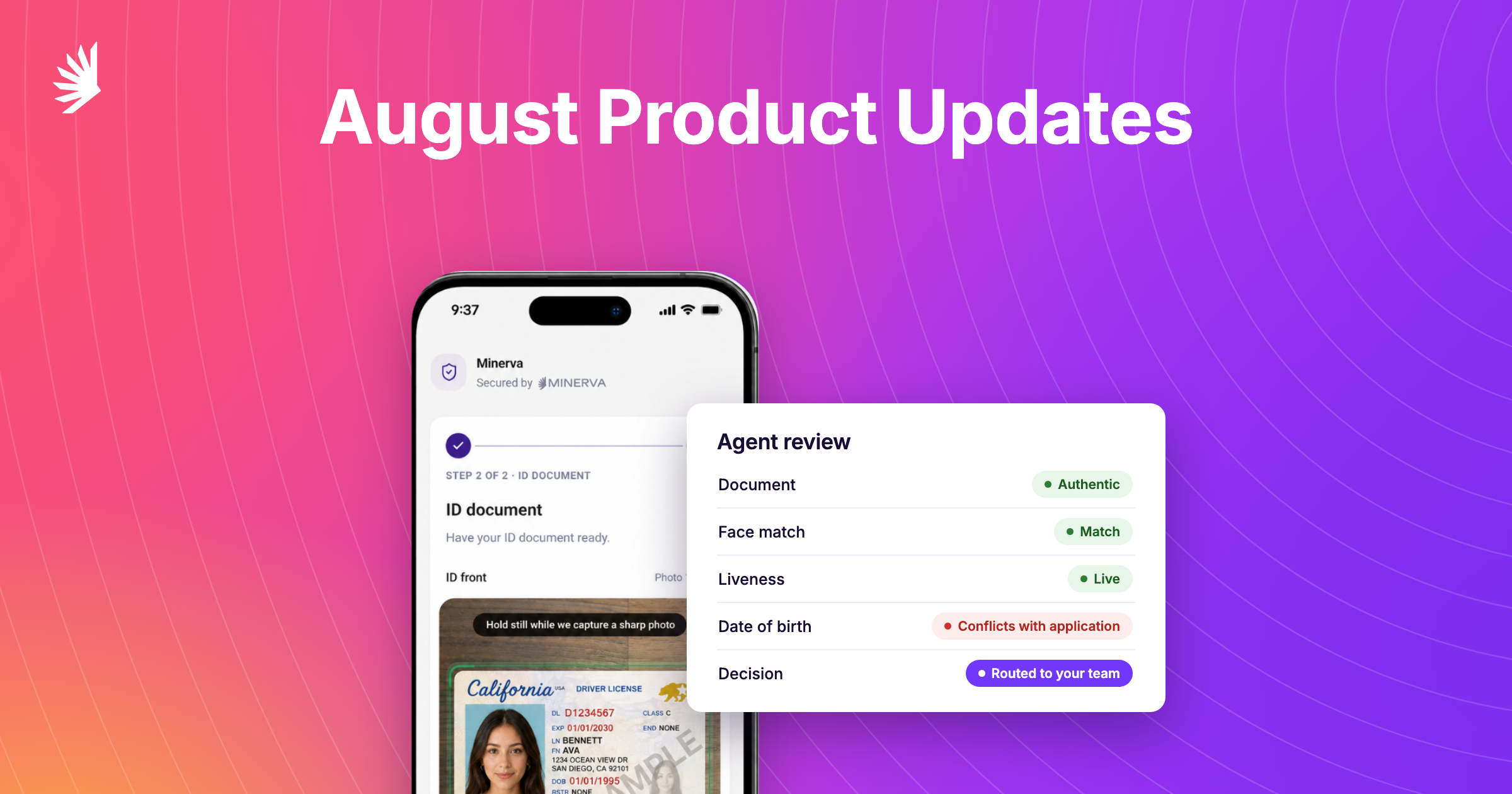
Most AML teams are looking to do two jobs at onboarding: verify the ID, and screen the customer for risk. The tools usually come from different vendors, so results move between systems by hand (or spreadsheets), leaving the customer with records in more than one place. Minerva now does both: identity verification runs inside your screening platform, on one customer record. Here's the rundown.
Key Updates
1. Identity Verification Where You Screen
What you can do
- The customer verifies on their phone, nothing to install. They open a link, and on-screen prompts catch glare and blur at capture, so fewer applications land in human review. About 15 to 20 seconds in typical testing.
- Get a pass, fail, or referral, typically within a minute. You decide what routes to your team. A face mismatch, a spoof, or a tampered document never auto-passes.
- Follow up in the same flow. Questionnaires and document uploads run inside the verification, so asking for more doesn't mean a second tool or an email thread. Outcome, rationale, and review history land on the customer record.
Why it's different
- AI agents review every ID. They read normal variation and flag real mismatches: tampered, expired, or fake documents, photos of screens, and details that conflict with the application. Nicknames pass; a different date of birth flags.
- Add your own ID types instead of waiting on a vendor. Passports, driver's licenses, and other standard IDs are built in. Describe the document and what to check, and it gets the standard anti-fraud review.
- One vendor, one customer record. The identity verification, the sanctions and politically exposed person (PEP) screening, and the questionnaires land on one record. When a question comes back, there's one place to look.
The product page walks through the full flow, including a capture demo.
See identity verification in Minerva →
2. Repeated Alert Suppression
Stop clearing the same alert every month. In ongoing monitoring, the match your analyst cleared last week comes back, gets read again, and gets written down again. Repeated Alert Suppression lets your team keep the repeats with nothing new out of your queue. A genuinely new story still lands as a fresh alert, and when an examiner asks why a repeat never reached an analyst, the answer is on the record. How it works →
3. Canadian PEP Coverage
Screening customers with Canadian exposure? FINTRAC, Canada's anti-money-laundering regulator, counts the mayor of any town as a politically exposed person, and most screening platforms don't reach that far: hits that never fire, or a manual search on every customer to cover the gap. Minerva built its own Canadian PEP data instead, from federal officials and judges down to the mayors of towns of 500 people, with the evidence behind every record. Read the story →
Questions, or want to see identity verification on your document types? Reach out to support@gominerva.com.

Download this Resource
Stay a step ahead with insights and updates from Minerva
Explore more


All-In-One, AI-Enhanced Risk Screening
We put the world's data to work on a comprehensive compliance platform.
Discover more efficient, effective investigations.